
A design concept
with a distinct user experience
A speculative design project.
ROLE
UX/UI Designer, Researcher, Workshop facilitator
GOAL
Create a design concept that aims for a distinct user experience
DURATION
5 days
Overview
The challenge
This was an individual school project assignment. The task was to create a design concept that aims for a distinct user experience/feeling – there must be a clear goal with the design, and the design choices must aim for it. In this project I focused 70% on the process and 30% och the final prototype.
Research and inspiration
Inspiration #1
Speculative design: Crafting the speculation
Article written by James Auger. Insights from this article are how to work in the intersections between the normal vs the spooky. I specially found the discussion regarding how to avoid the use of technologically advanced terms so that people can understand the design concept.
Inspiration #2
Articles and reports
I found a lot of research reports on the internet regarding dreams, sleep and technologies. Scientists have tried to create images of peoples dreams using AI, and they think it will be possible, in the future, to affect the brain by interfering the dreams.
Inspiration #3
Black Mirror episodes
I was particularly inspired by episodes where people who no longer exist reappears through saved data.
Inspiration #4
Sci-fi stories
I read a couple of sci-fi stories and got inspired of the good vs evil patterns. What appears to be good and safe will in the end turn out to something bad.
Design decisions
After research, I mapped my ideas on a piece of paper and shaped my boundaries:
- Interaction with a technology to create your dreams.
- Include elements of two emotions: Satisfaction & Concern.
- Pitch my concept in a context where it also got rattled.
- Add sound to enhance the experience.
INTERACTION WITH A TECHNOLOIGY to create your dreams.
SATISFACTION & CONCERN as two emotions I want to evoke in my design.
ADD SOUND to enhance the experience.
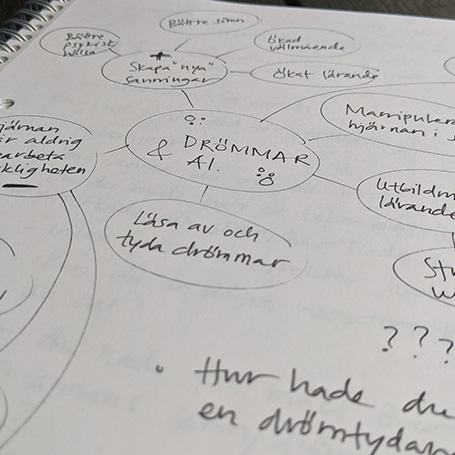
Mapped ideas.
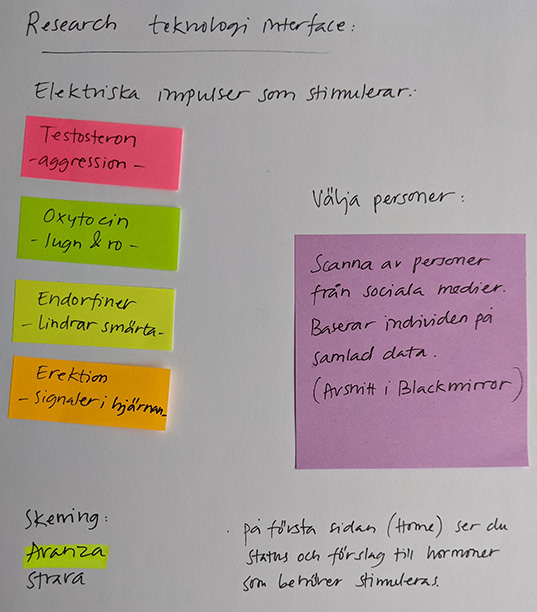
Notes taken during research.
User research
To get some inspiration for a design concept and understand how users would experience the technology in different contexts I interviewed some potential users.

“I would design happy dreams so that I wake up with positive emotions.“
“I want to remember my derams every night!“
“One consequence may be that you prefer to be in your dreams rather than in reality!”
Low-fi prototype
After conducting the interviews and doing research, I had enough data to make a first (very low-fi) prototype. I wrote down my design on post-it notes, grouping my insights into different categorys.
Ideation notes
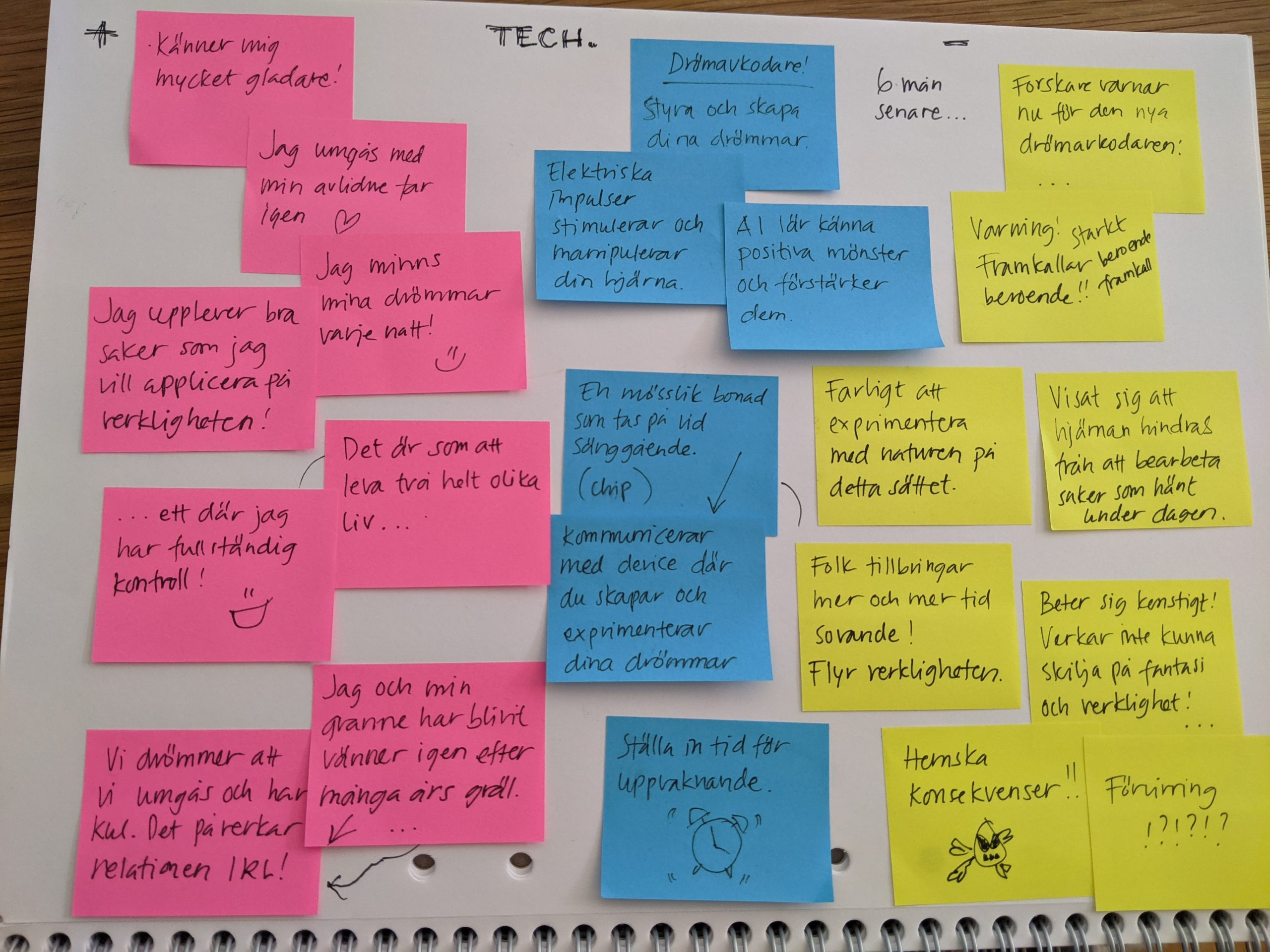
“It´s like having two different kind of lifes – one that I am in total control of ”
Workshop
To test my prototype I recruited three new people to join a workshop.
The goal was to generate ideas for a physical product and explore what emotions such a design can evoke.
Part #1
Technology
I told them about the technology based on my low-fi prototype and asked the participants what kind of physical body shape such a technology might have. Based on that I got some suggestions.
- A bed monitor
- A voice controlled app
“Something that is not connected to the phone because you want to be without it at night ”
PART #2
Positive emotions
Next, I told them about the positive reactions from my fictional early users of the technology. Then I asked them to write down three positive emotions based on what they heard and rank them.
“It’s hard to put my feelings into words. ”
PART #3
Negative emotions
I told them about the negative reactions from my fictional users of the technology. Then I asked them to write down three positive emotions based on what they heard and rank them.
“Should I consider myself a user or non-user of the technology? ”
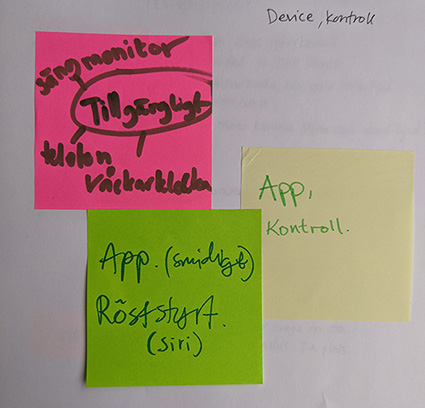
Notes taken during the workshop.
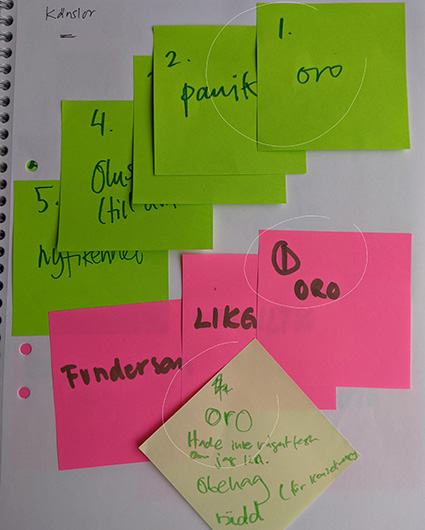
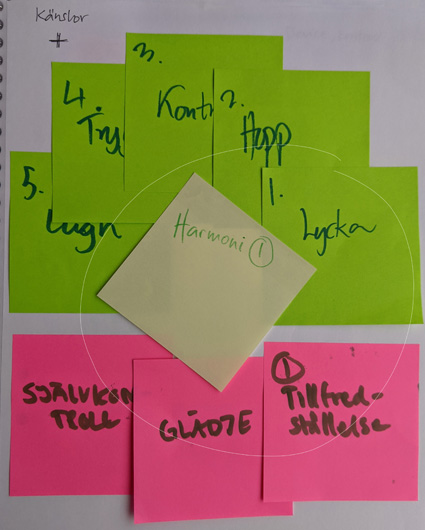
Findings from the workshop

Technology
Bed monitor

Positive emotion
Satisfaction

Negative emotion
Concern
Ideation, Prototype and Usability-Testing
Skewing
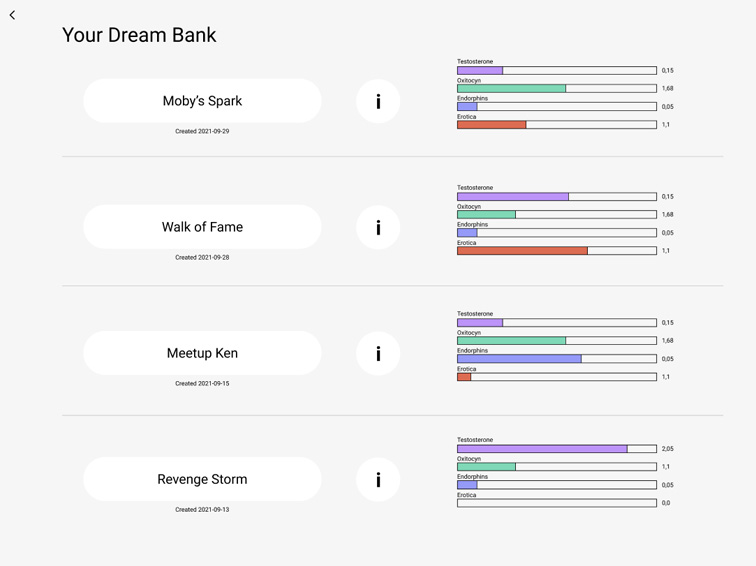
For ideation I used the method Skewing. If Avanza was a Dream Bank – What would it be/look like?
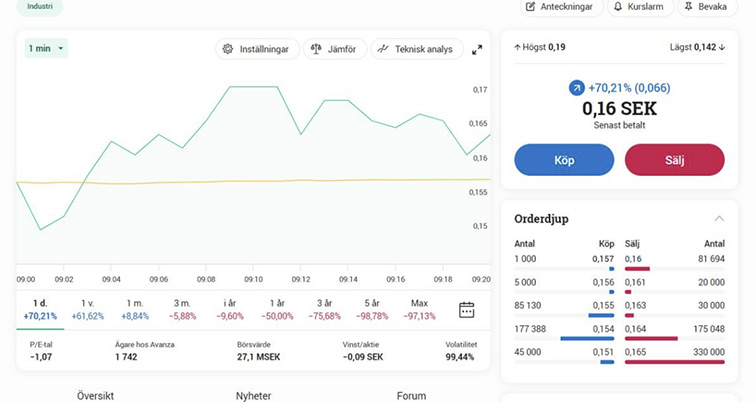
Print screen from Avanza (inspiration).
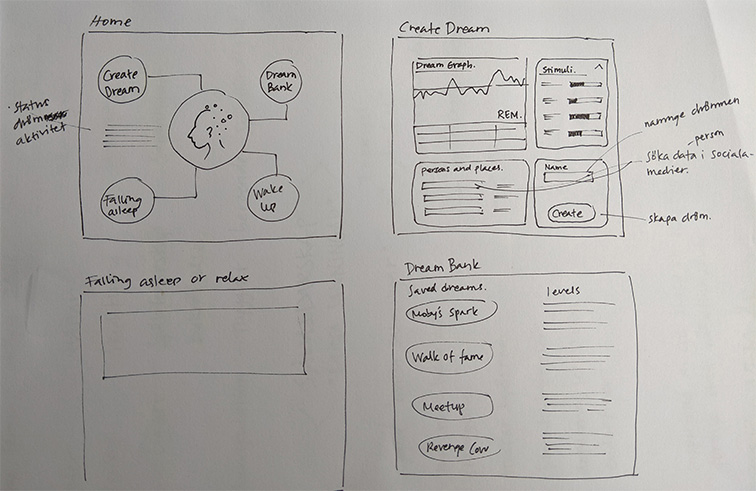
First rough sketch.
Mid-fi prototype
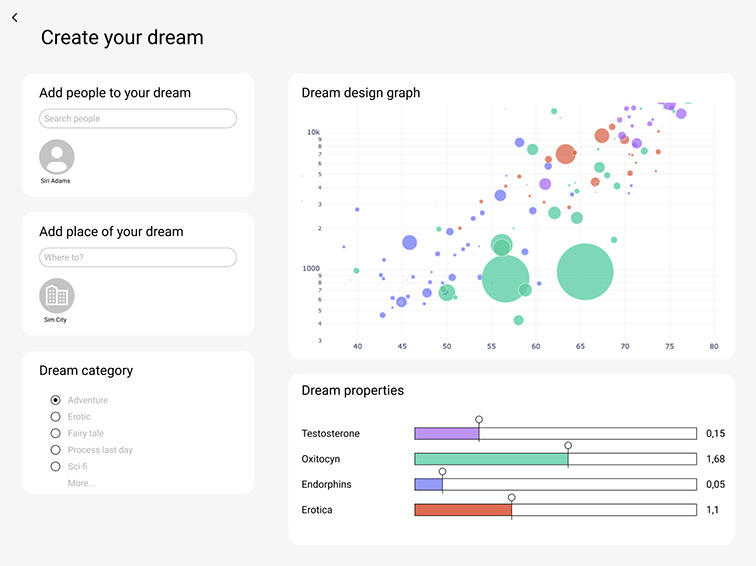
After testing my prototype there was some ambiguity around the functions.
Dream Graph and Dream Properties – What are they and what do they do.
The take away from this test was to find another way to explain these functions.
High-fi prototype
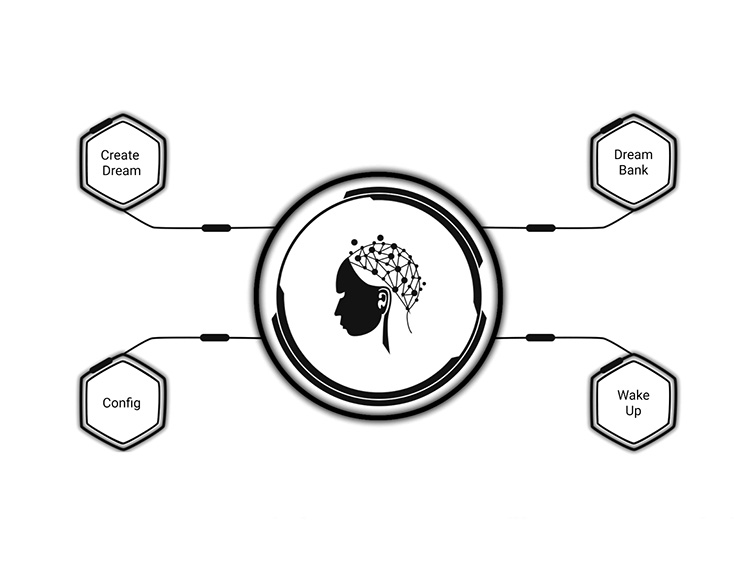
Due to lack of time, I scaled down the number of pages in the design concept to focus on the core interactions.
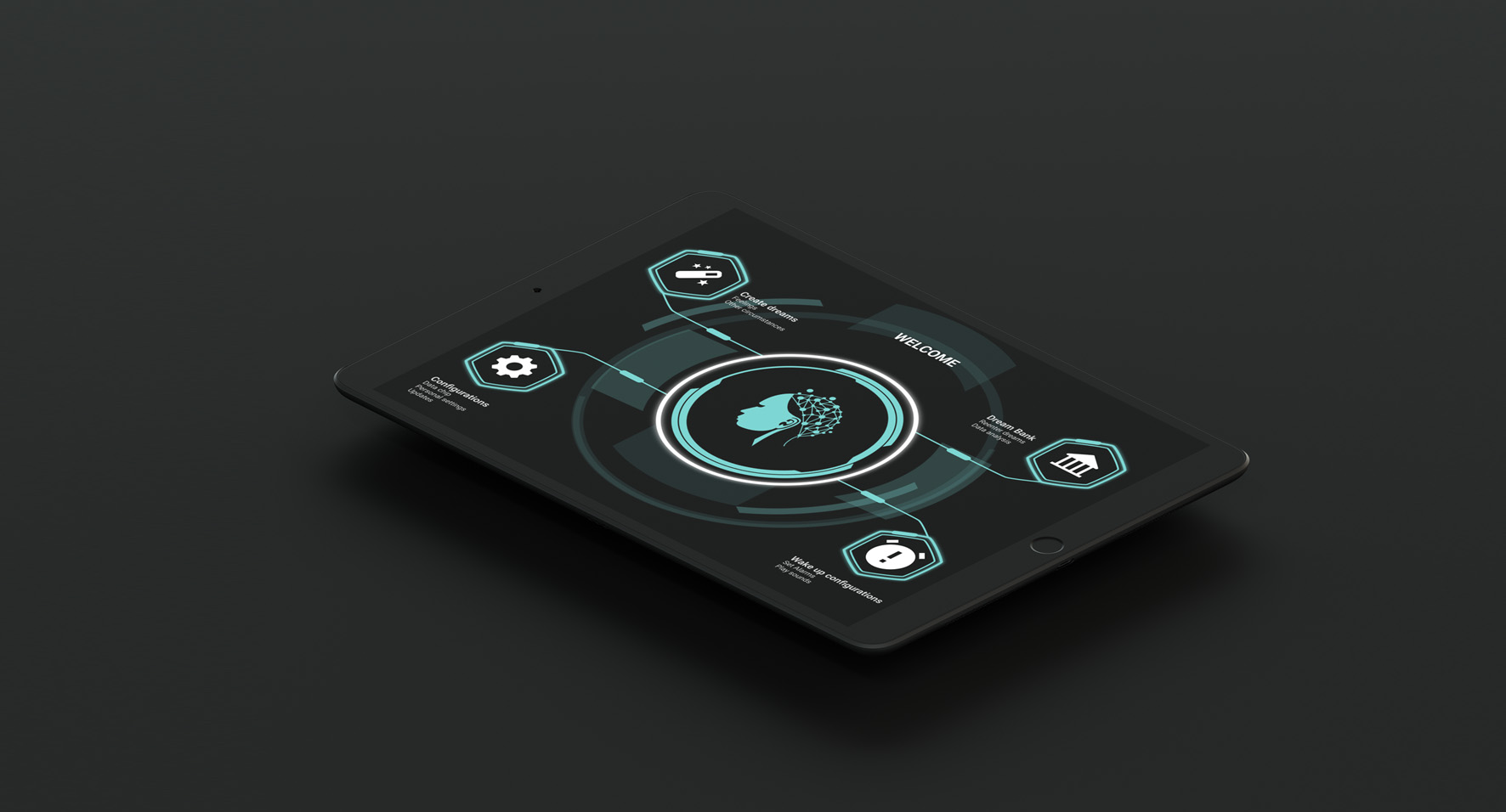
Explore my High-fi prototype here.
Learnings
#1 A concept with possibilities
Dreams are mysterious and unknown and I think I got a strong design concept with a lot of possibilities.
#2 Complementary methods
If I had som more time I could have used the method Concept portrait – to explore feelings of Satisfaction och Concern further.
#3 Complementary methods
During the workshop and the review of my first (Low-fi) prototype, there were participants who found it difficult to put their feelings into words. Here I could have used Microsoft Reaction Cards instead.
#4 Good enough
Because of the short time frame (5 days) I used a lot of “good enough” mentality to get ahead in the process.
#5 Trust the process
It was a challenge not to know from the beginning what the design solution should be. If you trust the process, the design is shaping along the way.
If there was more time available…
- I would like to explore it in a larger project – maybe give it another week
- I put a lot of focus on the process and did not have more than one day for the digital component. If there was more time I would have iterate the prototype to develope it further.